Patient Recall Campaigns That Convert: A 2026 Playbook
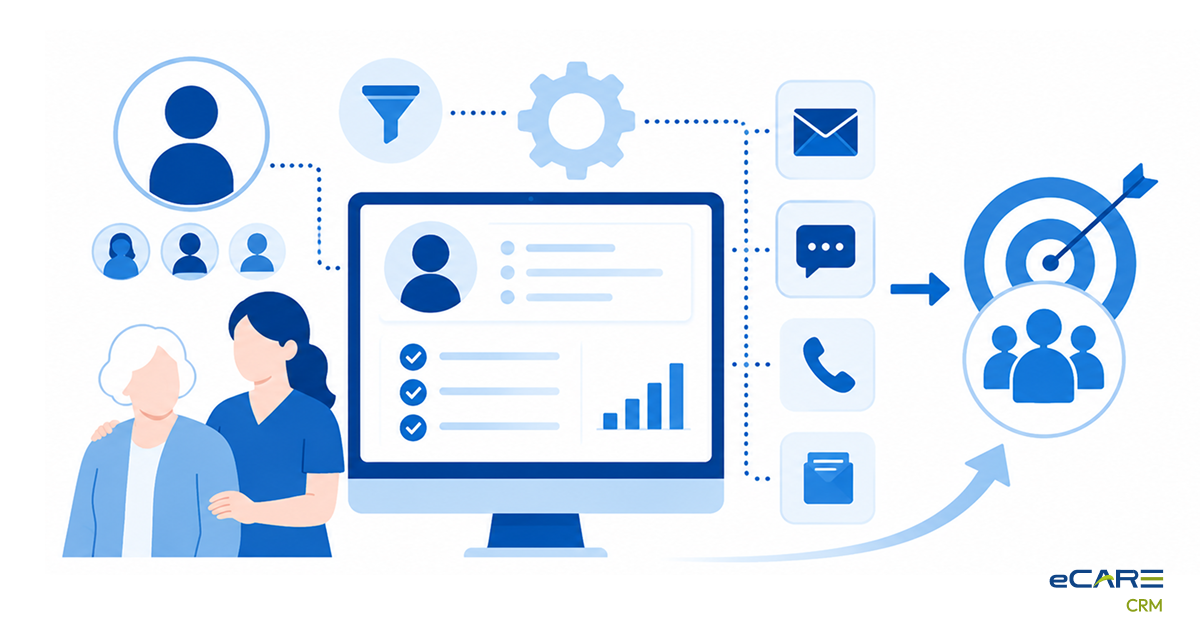
What we have seen on the side of many of our clients is that their recall campaigns typically convert 2-4%, and in a competitive healthcare landscape, this is not nearly enough.
And the reason for this low conversion is that the campaigns still rely on generic reminders, outdated patient lists, and mainly a CRM that was never meant to be used in healthcare. This is where the real challenge needs to be addressed because when the software doesn't have features that you need, the campaigns can't generate the needed results.
The healthcare organizations need to use healthcare CRM platforms that are designed for smart campaign management that goes beyond just sending push notifications. One such healthcare CRM tool is eCareCRM, which can create intelligent recall workflows that identify overdue patients and segment audiences based on their clinical and behavioral factors.
So, rather than relying on manual outreach or CRMs that don't understand how patients think, you need to switch to a CRM that is designed for healthcare. This will change how you approach the right audience at the right time through the right channels.
In this blog, we will break down the key elements of how high-performing patient recall campaigns are run, including audience segmentation, communication strategy, and recall timing to improve patient retention and maximum appointment conversions in 2026.
Why is your recall conversion stuck?
When we look at why your recall conversion is stuck through the lens of physician practices, specialty clinics, and DSOs, the picture is more nuanced than the marketplace conversation suggests. Most teams approach this as a tooling question, but the leaders we work with treat it as a workflow design question first and a tooling question second. The difference shows up in deployment velocity, in user adoption curves, and ultimately in the durability of the gains six and twelve months out from go-live.
The practical framework starts with a sharp baseline. Before any eCareCRM capability is introduced, the team needs to agree on three numbers: where they are today, where they want to be in 90 days, and where they want to be in 12 months. Without those three numbers documented at the start, every subsequent decision becomes a debate about taste rather than a decision against a target. Teams that skip this step typically spend the first quarter relearning what they should have agreed on at the kickoff.
In practice, what this looks like is a structured pilot of 30 to 60 days with a small team that represents the diversity of the broader organization. Choose pilot participants who include at least one skeptic — the skeptic's feedback is more valuable than three enthusiasts combined, because the skeptic surfaces the friction that enthusiasts power through and that everyone else will trip over at scale. Capture quantitative metrics weekly and run a structured retrospective at week 4 to feed the configuration back into the deployment plan.
Two mistakes to avoid. First, do not confuse activity with progress: the number of users onboarded is not the same as the number of users who have changed their workflow. Second, do not optimize for the wrong number: it is easy to celebrate adoption metrics while the underlying outcome metrics (revenue, satisfaction, retention, time saved) stay flat. The teams that report the strongest results twelve months out are the ones that set their dashboards on outcomes from day one and watched those numbers weekly.
Segmenting by clinical need + behavioral intent
When we look at segmenting by clinical need + behavioral intent through the lens of physician practices, specialty clinics, and DSOs, the picture is more nuanced than the marketplace conversation suggests. Most teams approach this as a tooling question, but the leaders we work with treat it as a workflow design question first and a tooling question second. The difference shows up in deployment velocity, in user adoption curves, and ultimately in the durability of the gains six and twelve months out from go-live.
The practical framework starts with a sharp baseline. Before any eCareCRM capability is introduced, the team needs to agree on three numbers: where they are today, where they want to be in 90 days, and where they want to be in 12 months. Without those three numbers documented at the start, every subsequent decision becomes a debate about taste rather than a decision against a target. Teams that skip this step typically spend the first quarter relearning what they should have agreed on at the kickoff.
In practice, what this looks like is a structured pilot of 30 to 60 days with a small team that represents the diversity of the broader organization. Choose pilot participants who include at least one skeptic — the skeptic's feedback is more valuable than three enthusiasts combined, because the skeptic surfaces the friction that enthusiasts power through and that everyone else will trip over at scale. Capture quantitative metrics weekly and run a structured retrospective at week 4 to feed the configuration back into the deployment plan.
Two mistakes to avoid. First, do not confuse activity with progress: the number of users onboarded is not the same as the number of users who have changed their workflow. Second, do not optimize for the wrong number: it is easy to celebrate adoption metrics while the underlying outcome metrics (revenue, satisfaction, retention, time saved) stay flat. The teams that report the strongest results twelve months out are the ones that set their dashboards on outcomes from day one and watched those numbers weekly.

Channel mix: SMS first, then voice, then mail
When we look at channel mix: sms first, then voice, then mail through the lens of physician practices, specialty clinics, and DSOs, the picture is more nuanced than the marketplace conversation suggests. Most teams approach this as a tooling question, but the leaders we work with treat it as a workflow design question first and a tooling question second. The difference shows up in deployment velocity, in user adoption curves, and ultimately in the durability of the gains six and twelve months out from go-live.
The practical framework starts with a sharp baseline. Before any eCareCRM capability is introduced, the team needs to agree on three numbers: where they are today, where they want to be in 90 days, and where they want to be in 12 months. Without those three numbers documented at the start, every subsequent decision becomes a debate about taste rather than a decision against a target. Teams that skip this step typically spend the first quarter relearning what they should have agreed on at the kickoff.
In practice, what this looks like is a structured pilot of 30 to 60 days with a small team that represents the diversity of the broader organization. Choose pilot participants who include at least one skeptic — the skeptic's feedback is more valuable than three enthusiasts combined, because the skeptic surfaces the friction that enthusiasts power through and that everyone else will trip over at scale. Capture quantitative metrics weekly and run a structured retrospective at week 4 to feed the configuration back into the deployment plan.
Two mistakes to avoid. First, do not confuse activity with progress: the number of users onboarded is not the same as the number of users who have changed their workflow. Second, do not optimize for the wrong number: it is easy to celebrate adoption metrics while the underlying outcome metrics (revenue, satisfaction, retention, time saved) stay flat. The teams that report the strongest results twelve months out are the ones that set their dashboards on outcomes from day one and watched those numbers weekly.
Recall sequence timing
When we look at recall sequence timing through the lens of physician practices, specialty clinics, and DSOs, the picture is more nuanced than the marketplace conversation suggests. Most teams approach this as a tooling question, but the leaders we work with treat it as a workflow design question first and a tooling question second. The difference shows up in deployment velocity, in user adoption curves, and ultimately in the durability of the gains six and twelve months out from go-live.
The practical framework starts with a sharp baseline. Before any eCareCRM capability is introduced, the team needs to agree on three numbers: where they are today, where they want to be in 90 days, and where they want to be in 12 months. Without those three numbers documented at the start, every subsequent decision becomes a debate about taste rather than a decision against a target. Teams that skip this step typically spend the first quarter relearning what they should have agreed on at the kickoff.
In practice, what this looks like is a structured pilot of 30 to 60 days with a small team that represents the diversity of the broader organization. Choose pilot participants who include at least one skeptic — the skeptic's feedback is more valuable than three enthusiasts combined, because the skeptic surfaces the friction that enthusiasts power through and that everyone else will trip over at scale. Capture quantitative metrics weekly and run a structured retrospective at week 4 to feed the configuration back into the deployment plan.
Two mistakes to avoid. First, do not confuse activity with progress: the number of users onboarded is not the same as the number of users who have changed their workflow. Second, do not optimize for the wrong number: it is easy to celebrate adoption metrics while the underlying outcome metrics (revenue, satisfaction, retention, time saved) stay flat. The teams that report the strongest results twelve months out are the ones that set their dashboards on outcomes from day one and watched those numbers weekly.

Measuring recall ROI properly
When we look at measuring recall roi properly through the lens of physician practices, specialty clinics, and DSOs, the picture is more nuanced than the marketplace conversation suggests. Most teams approach this as a tooling question, but the leaders we work with treat it as a workflow design question first and a tooling question second. The difference shows up in deployment velocity, in user adoption curves, and ultimately in the durability of the gains six and twelve months out from go-live.
The practical framework starts with a sharp baseline. Before any eCareCRM capability is introduced, the team needs to agree on three numbers: where they are today, where they want to be in 90 days, and where they want to be in 12 months. Without those three numbers documented at the start, every subsequent decision becomes a debate about taste rather than a decision against a target. Teams that skip this step typically spend the first quarter relearning what they should have agreed on at the kickoff.
In practice, what this looks like is a structured pilot of 30 to 60 days with a small team that represents the diversity of the broader organization. Choose pilot participants who include at least one skeptic — the skeptic's feedback is more valuable than three enthusiasts combined, because the skeptic surfaces the friction that enthusiasts power through and that everyone else will trip over at scale. Capture quantitative metrics weekly and run a structured retrospective at week 4 to feed the configuration back into the deployment plan.
If your team takes one thing from this section, take this: the measurement cadence matters more than the measurement choice. Weekly cadence with a forgiving metric beats quarterly cadence with a perfect metric every time. Tighter feedback loops compound. Set the rhythm at the start of the deployment, protect it through the first 12 weeks, and the rest of the playbook does most of its own work.
In a nutshell, for increasing the patient reactivation rate, you not just need to change your strategies but also need a CRM that understands how healthcare works. When you understand how patients behave and decode their patterns, developing patient recall campaigns becomes much easier and efficient.
So, if you want to see how you can improve your appointment bookings and patient retention then click here to see eCareCRM in action.
Frequently Asked Questions
How long does a typical eCareCRM deployment take?
For most physician practices, specialty clinics, and DSOs, a sensible first deployment runs 30 to 60 days from kickoff to first measurable result. The variables that move that timeline are the depth of integration required, the breadth of pilot users in week one, and the cadence of configuration review.
What is the realistic ROI window?
The earliest meaningful ROI signal is at day 30 to 45 — typically a workflow time metric that moves first. The financial ROI signal usually appears between month 3 and month 6, depending on which baseline KPIs you set at kickoff.
How does eCareCRM handle change management?
The change management problem is rarely about the tooling — it is about workflow design. eCareCRM deployments succeed when the leadership team owns the workflow change story and the vendor team owns the configuration.
What integration depth does eCareCRM require?
Most physician practices, specialty clinics, and DSOs run a heterogeneous stack assembled over many years. eCareCRM integrates at the depth required by each system and exposes structured APIs for downstream tooling.
How do I evaluate eCareCRM against alternatives?
Score each vendor on five axes: workflow fit, integration depth, configuration flexibility, support quality, and pricing transparency. Insist on a 30-day live pilot before signing a multi-year commitment.